Case Studies

Selected paid social work, across five niches.

Each engagement is unique, but the operating system is the same: audit, strategy, execution, scale. Filter by industry to see how it plays out in practice.

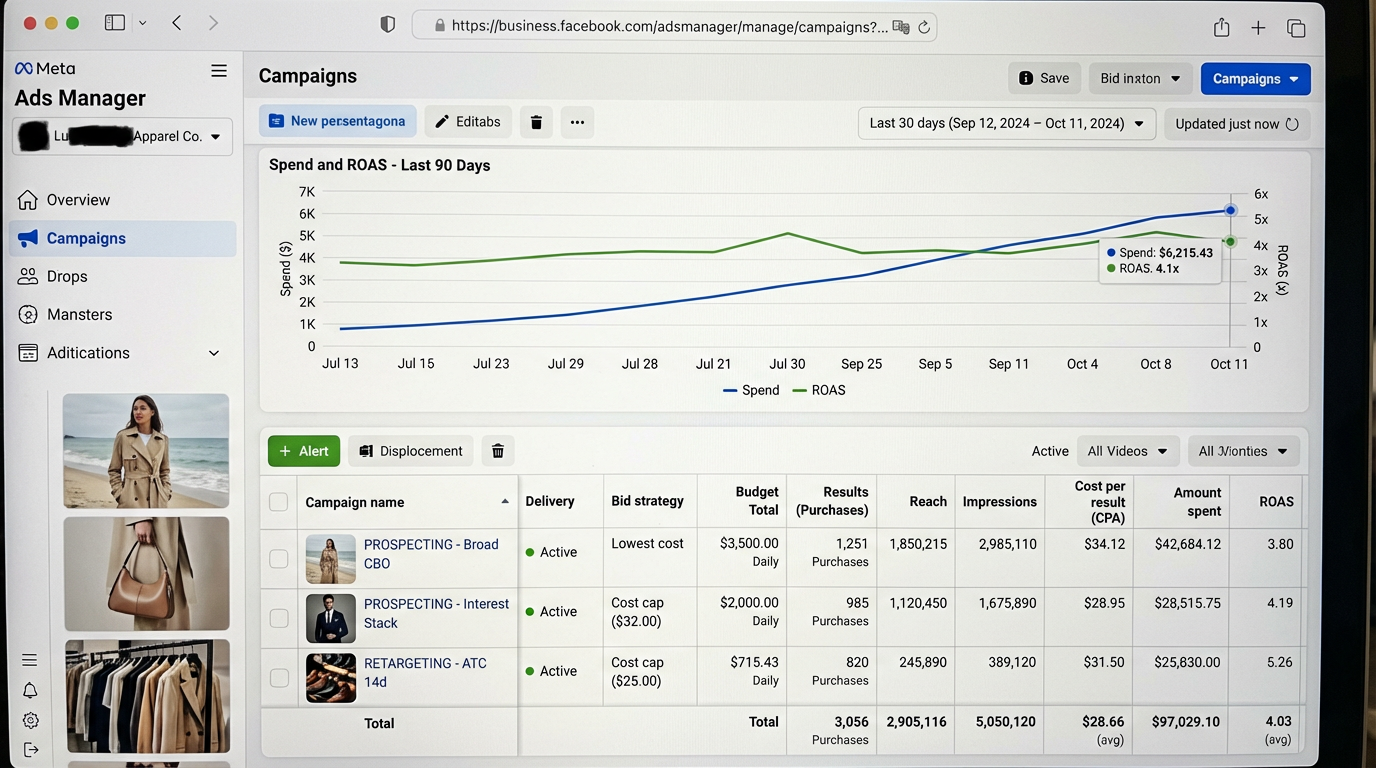
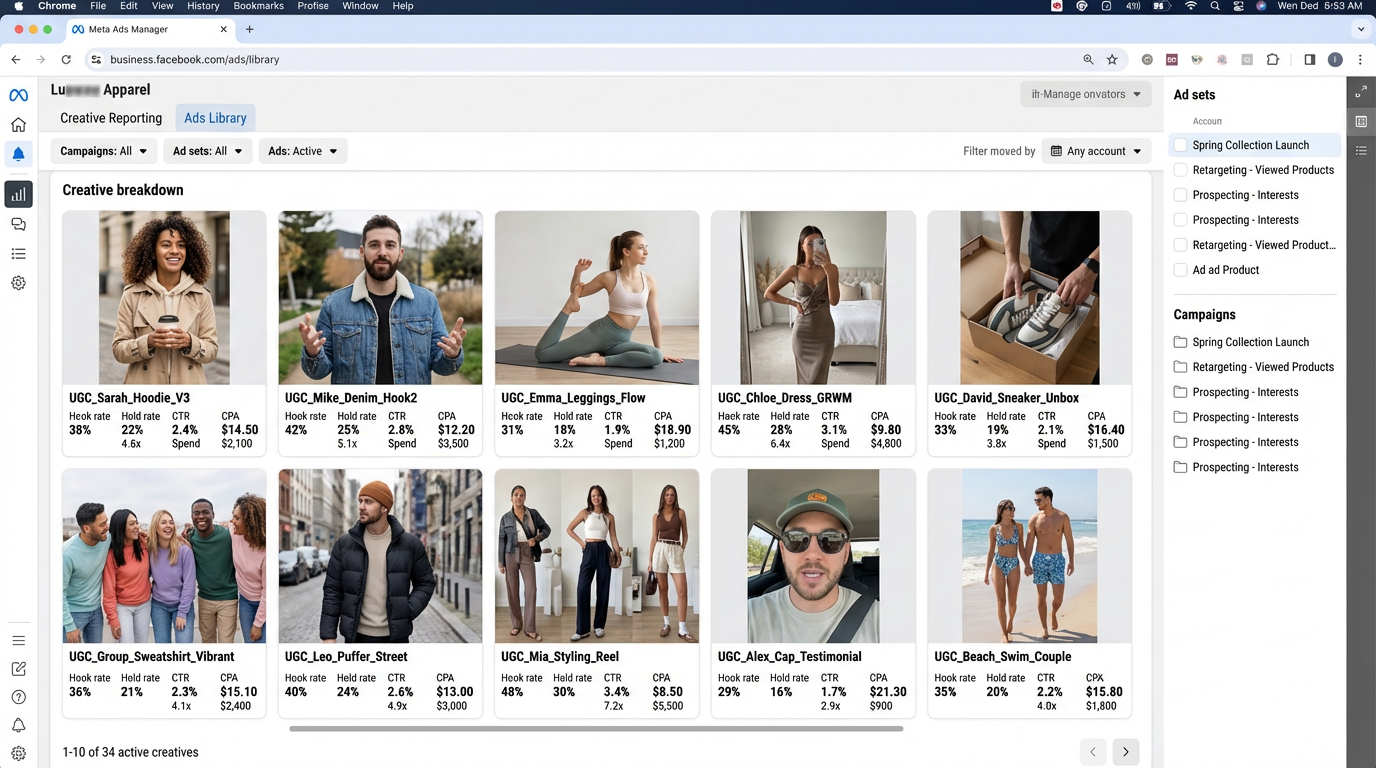
DTC apparel brand — Fashion performance dashboard
Ads Manager
DTC apparel brand — Fashion ROAS report
ROAS Report
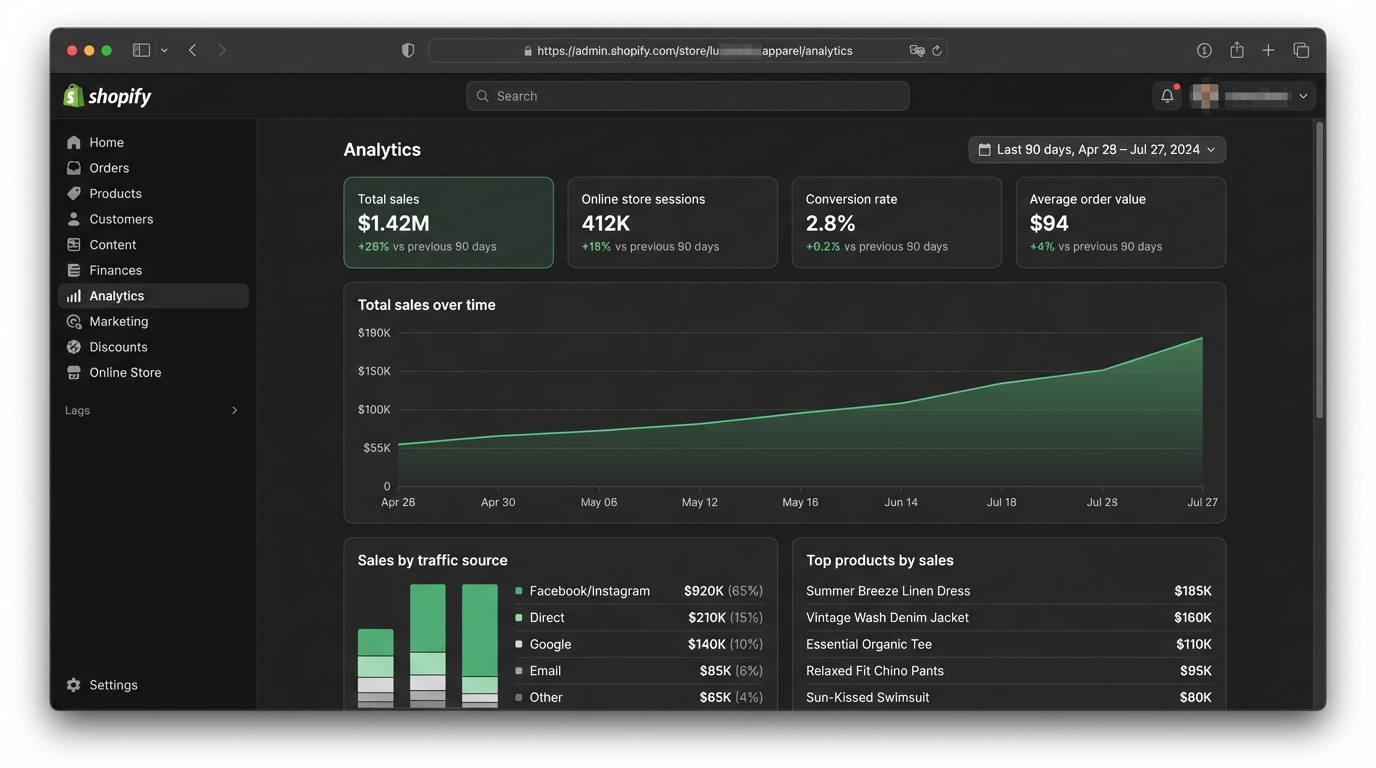
DTC apparel brand — Fashion funnel data
Funnel Data
FashionUnited States

DTC apparel brand

Challenge.A growing fashion brand was stuck at a CPA ceiling and couldn't scale beyond a few thousand dollars per day without breaking ROAS.

Strategy.Restructured the account into clean prospecting and retargeting layers, rebuilt the creative testing pipeline around UGC and lifestyle hooks, and introduced a weekly scaling framework based on contribution margin rather than ROAS alone.

3.4×
Monthly ad spend scaled
+62%
ROAS improvement
−38%
CPA reduction
Context

Mid-six-figure DTC apparel brand with strong organic demand but a paid account that had been stitched together by three different agencies. Creative was stale, the structure was bloated with 40+ ad sets, and the team was making scaling decisions on last-click ROAS in Shopify.

Diagnosis

Audit revealed heavy audience overlap, learning phase fatigue across 70% of ad sets, and a creative pipeline producing one new concept per month — not nearly enough to outrun fatigue at the spend level they wanted to hit.

Execution
  • Consolidated to a 2-campaign prospecting + 1-campaign retargeting structure with broad targeting and CBO.
  • Stood up a weekly UGC pipeline with 3 creators, producing 8–12 net-new concepts per month.
  • Introduced a contribution-margin scaling rule: any ad set above target mCAC gets +20% budget every 48 hours.
  • Replaced last-click reporting with a blended view tied to weekly contribution margin, reviewed every Monday.
Outcome

Within 90 days, daily spend moved from $1.8K to $6.2K while holding a profitable mCAC. The brand has stayed at that spend level for two consecutive quarters with consistent creative throughput.
Timeline
90 days to scale, ongoing retainer
Spend
$1.8K → $6.2K daily
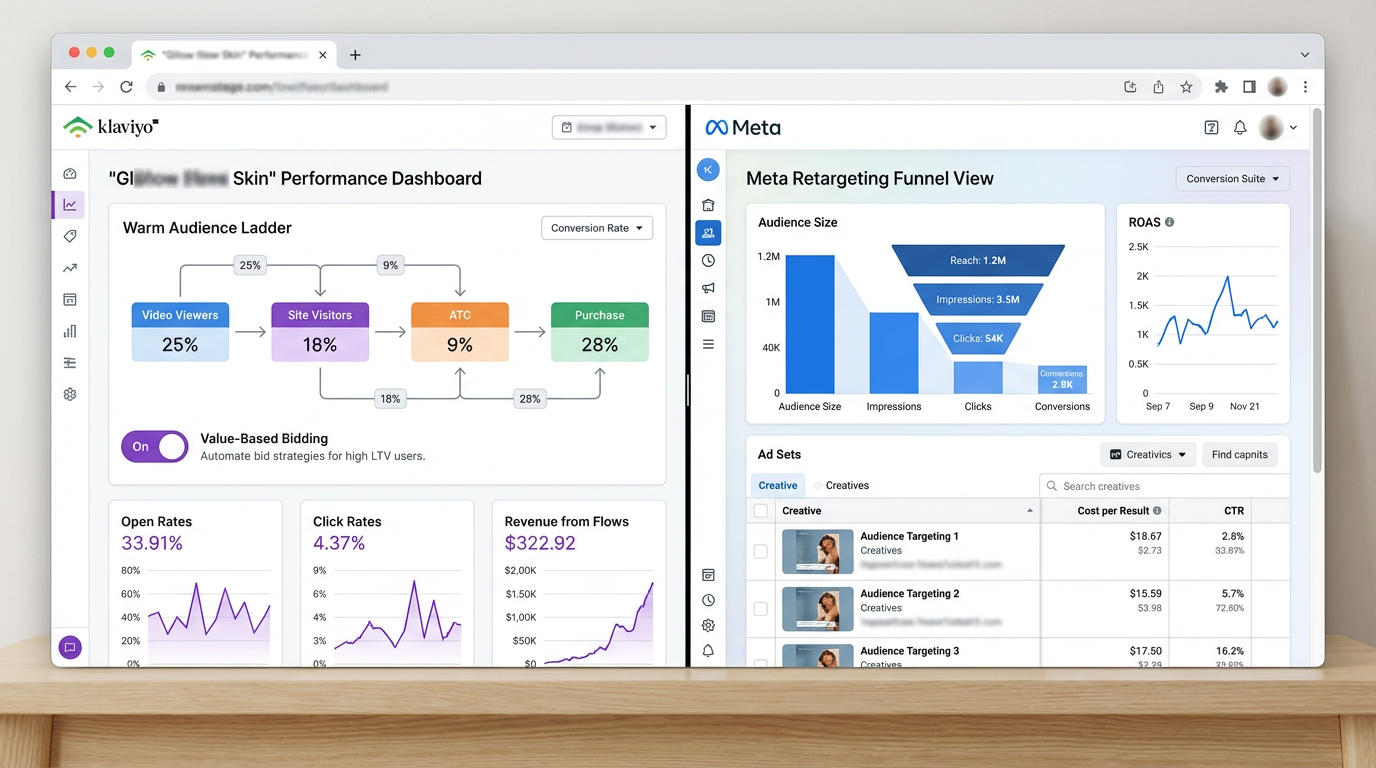
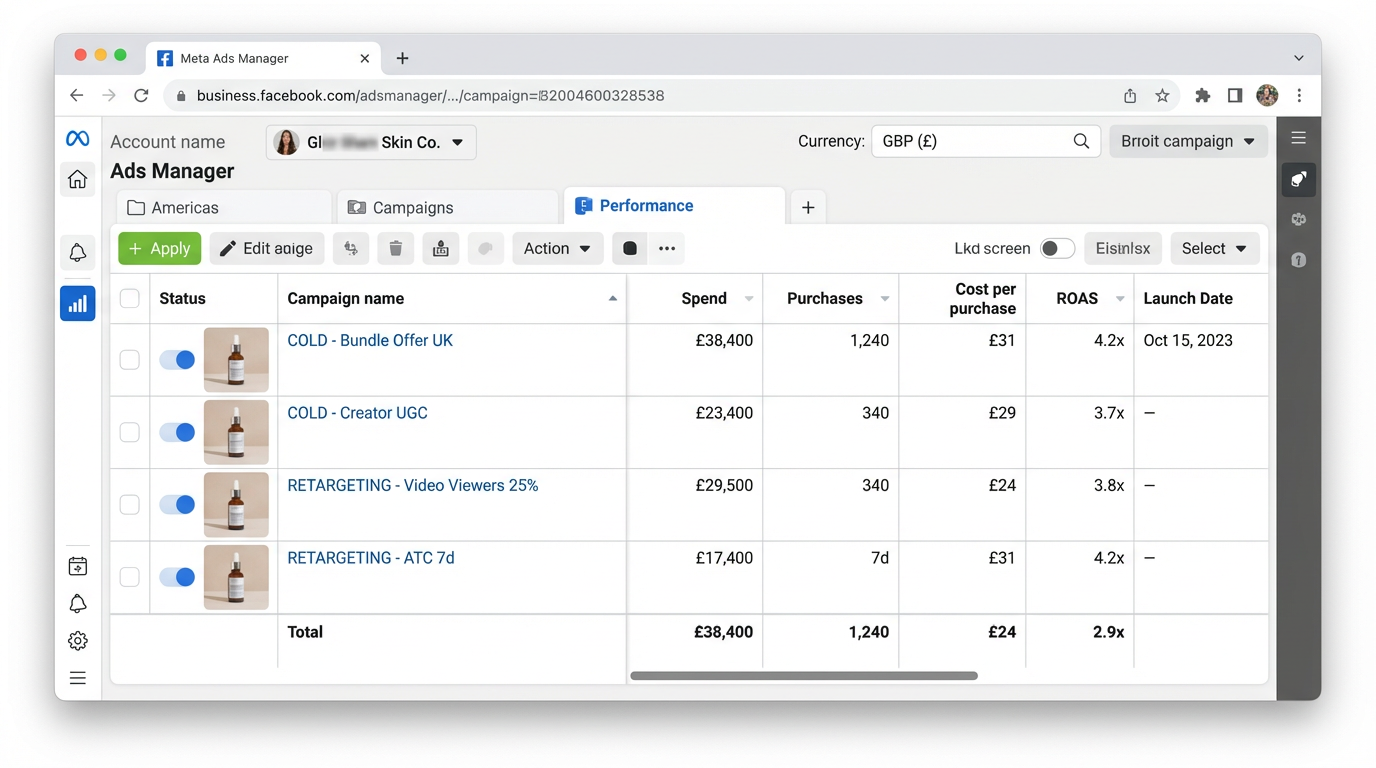
Premium skincare line — Beauty performance dashboard
Ads Manager
Premium skincare line — Beauty ROAS report
ROAS Report
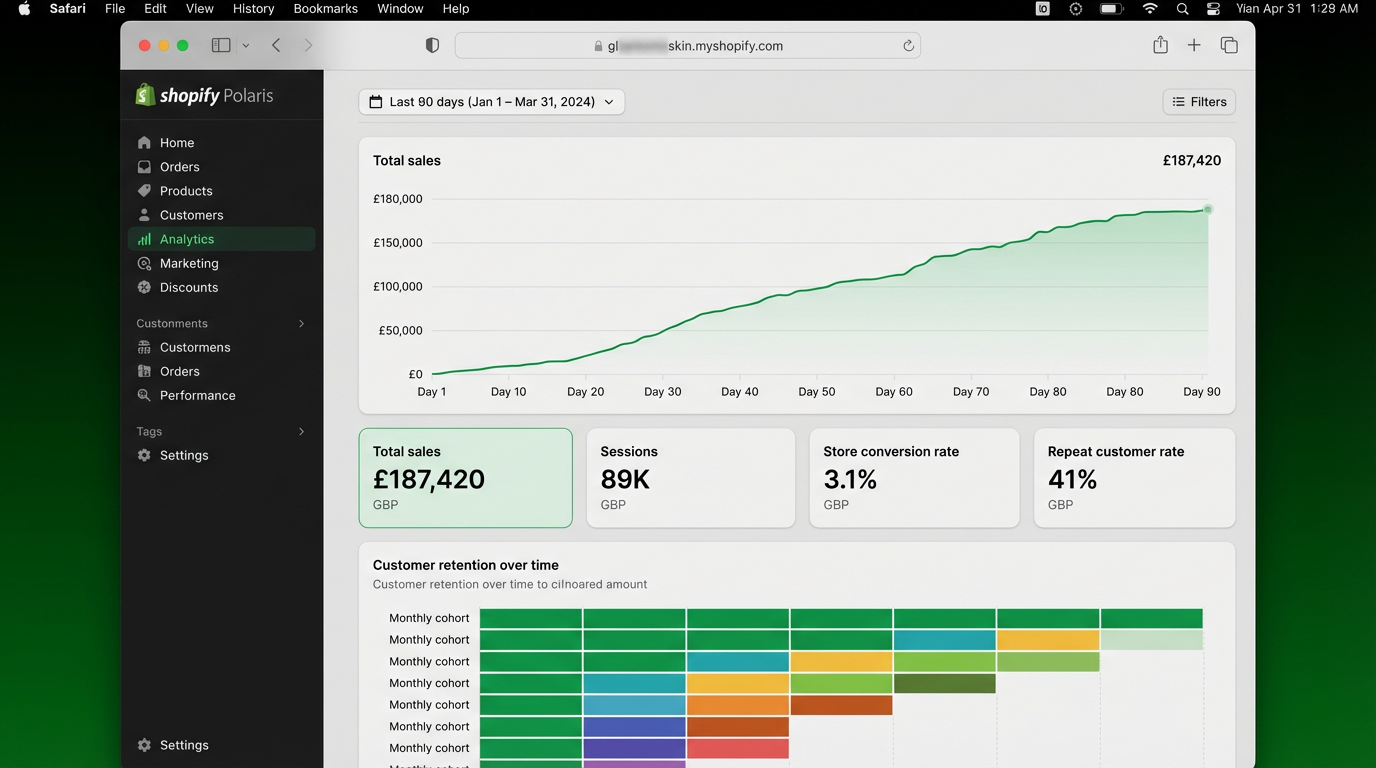
Premium skincare line — Beauty funnel data
Funnel Data
BeautyUnited Kingdom

Premium skincare line

Challenge.A new skincare line needed a profitable launch with limited brand awareness in a saturated category.

Strategy.Built a creator-led creative system, launched cold campaigns with offer-driven angles, and layered retention via warm-audience retargeting and value-based bidding.

6 figures
First-90-day revenue
+41%
Repeat purchase rate
−29%
Cost per first purchase
Context

Founder-led skincare line launching three hero SKUs in the UK with a £40K test budget and zero brand awareness. The category was crowded with well-funded incumbents already running heavy paid social.

Diagnosis

The product was strong but the launch creative was studio-shot and brand-led. In a saturated feed, that reads as 'just another skincare ad'. We needed a faster path to trust than polished brand assets could deliver.

Execution
  • Recruited 6 micro-creators in the skincare niche to produce raw, problem-solution video.
  • Launched cold campaigns built around a single bundle offer with a clear first-purchase incentive.
  • Built a warm-audience retargeting ladder: video viewers → site visitors → ATC, each with its own creative angle.
  • Switched to value-based bidding once 50 purchases were attributed, prioritising repeat-likely customer profiles.
Outcome

First 90 days closed at six-figure revenue with a healthy first-purchase margin. Repeat purchase rate climbed 41% as the retargeting ladder matured and email backfilled retention.

Timeline
Launch + 90 days
Spend
£40K test → ongoing
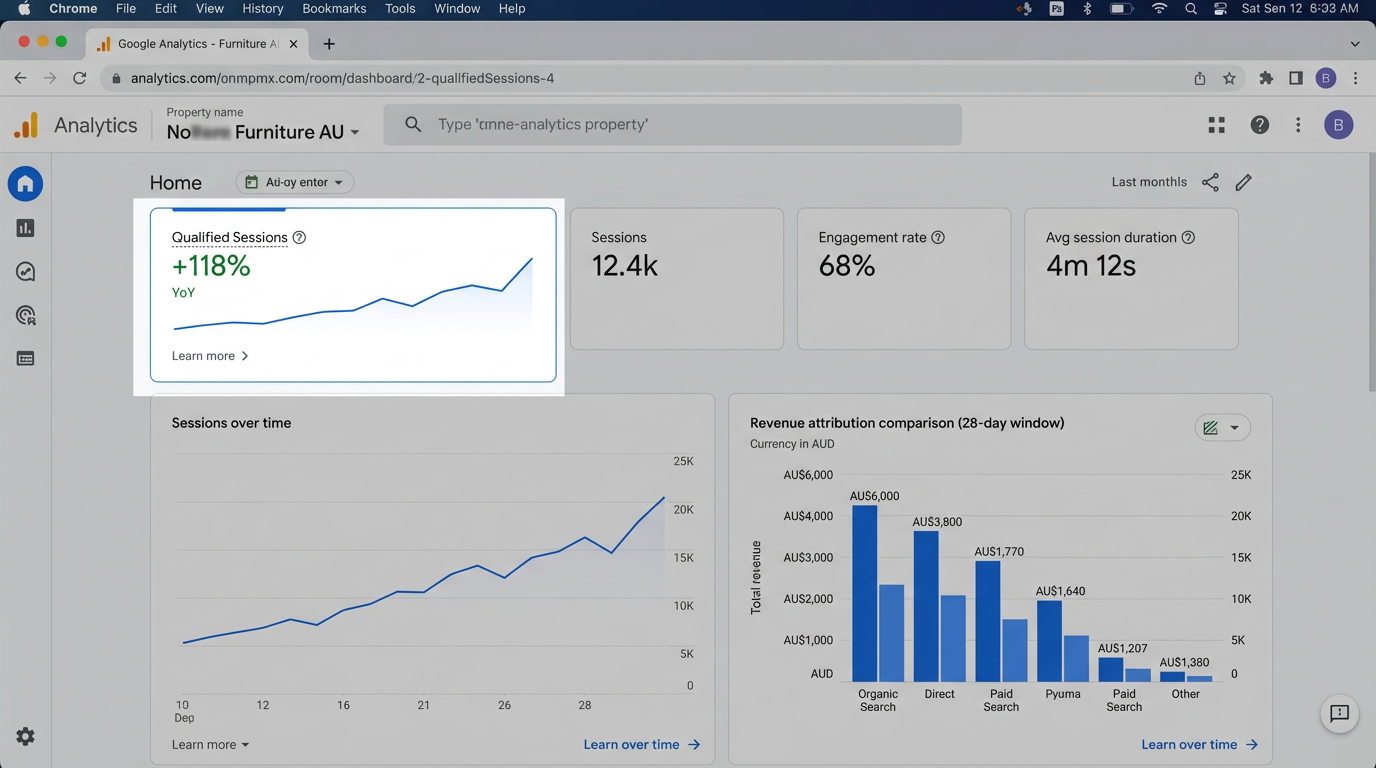
Designer furniture studio — Furniture performance dashboard
Ads Manager
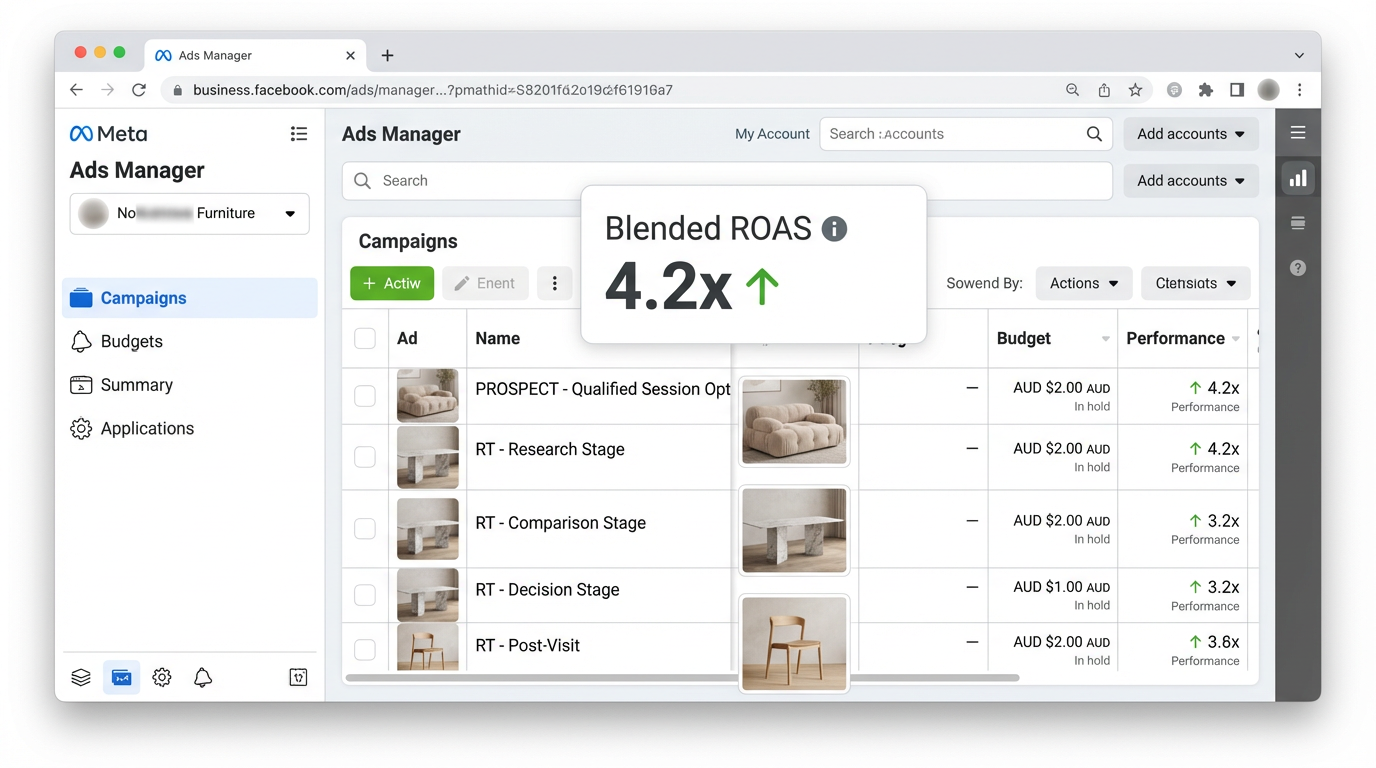
Designer furniture studio — Furniture ROAS report
ROAS Report
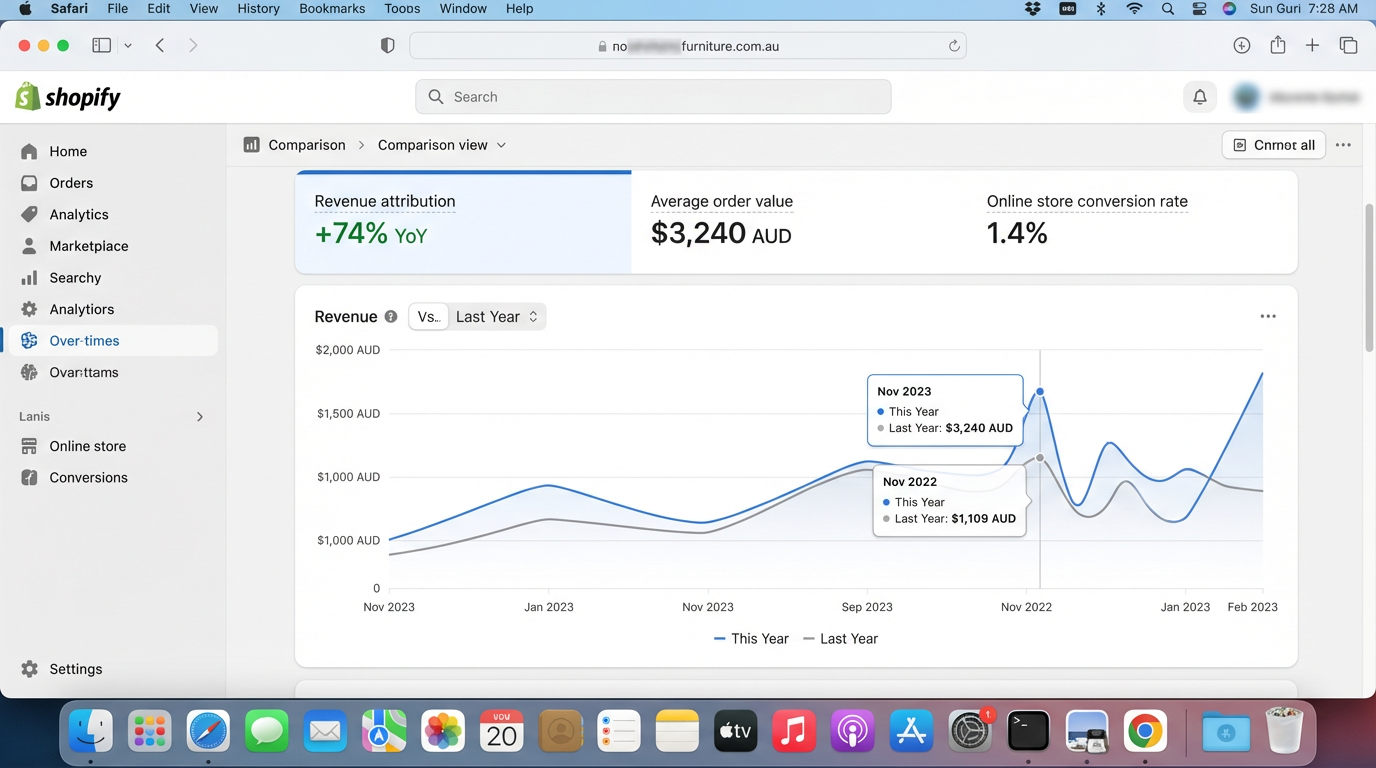
Designer furniture studio — Furniture funnel data
Funnel Data
FurnitureAustralia

Designer furniture studio

Challenge.Long sales cycle and high AOV made attribution noisy and decision-making slow.

Strategy.Implemented a multi-touch view of campaigns, built dedicated product education ads, and designed a retargeting ladder mapped to the buyer's actual research timeline.

+118%
Qualified site sessions
4.2×
Blended ROAS
+74%
Attributed revenue YoY
Context

Designer furniture studio in Sydney with AOVs between $1.8K and $6K. Buyers typically researched for 3–8 weeks before purchasing, which made campaign signal slow and noisy.

Diagnosis

The previous setup optimised for purchase events that arrived too late and in too small a volume to teach the algorithm anything useful. The team was killing campaigns before they had a chance to learn.

Execution
  • Defined a custom 'qualified session' event (3+ pages, 90+ seconds, key product viewed) and optimised cold campaigns toward it.
  • Produced product-education video for each hero SKU — materials, dimensions, designer story.
  • Built a 4-stage retargeting ladder mapped to research, comparison, decision and post-visit windows.
  • Reviewed performance on a 28-day window with a blended attribution view alongside platform data.
Outcome

Qualified sessions more than doubled, blended ROAS held at 4.2× across the longer window, and attributed revenue grew 74% year over year without a proportional increase in spend.

Timeline
6 months
Spend
Steady, +18% YoY
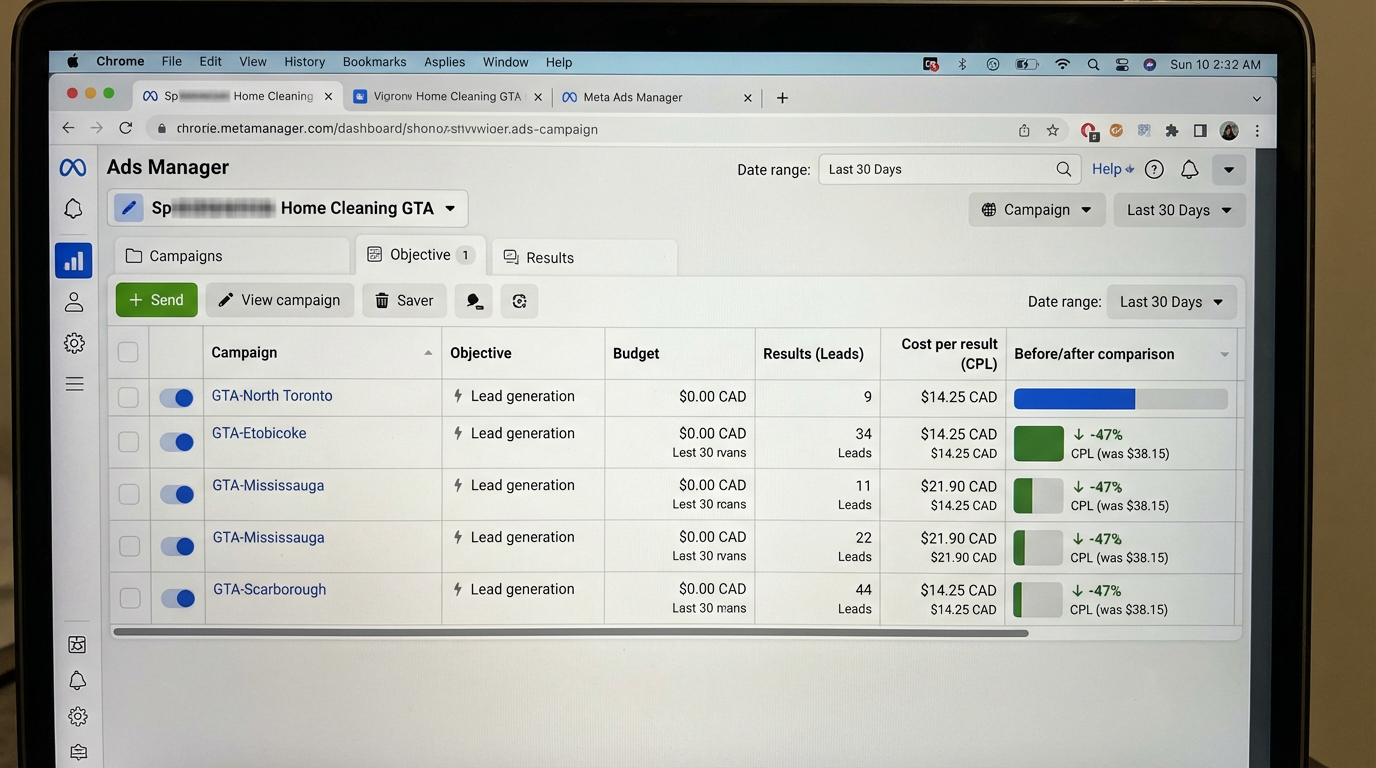
Residential cleaning company — Cleaning performance dashboard
Ads Manager
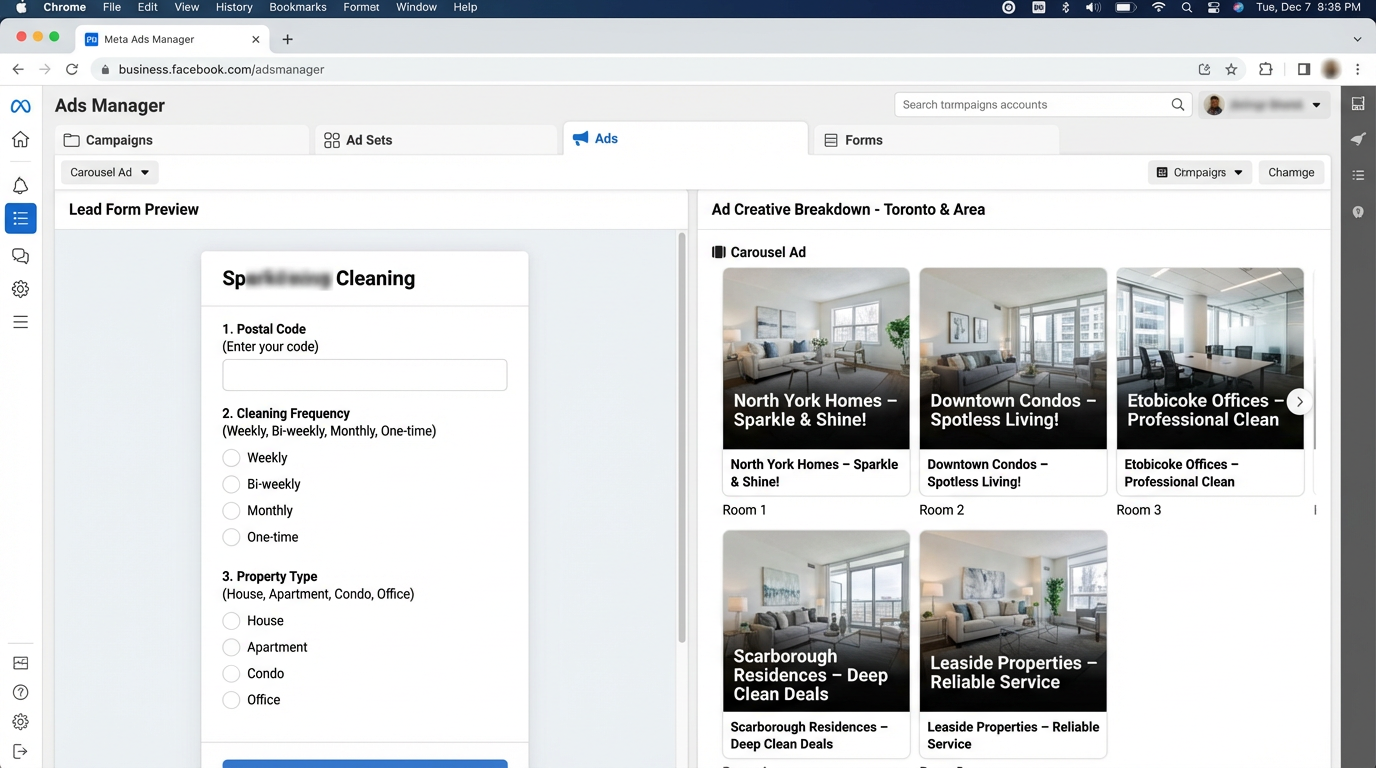
Residential cleaning company — Cleaning ROAS report
ROAS Report
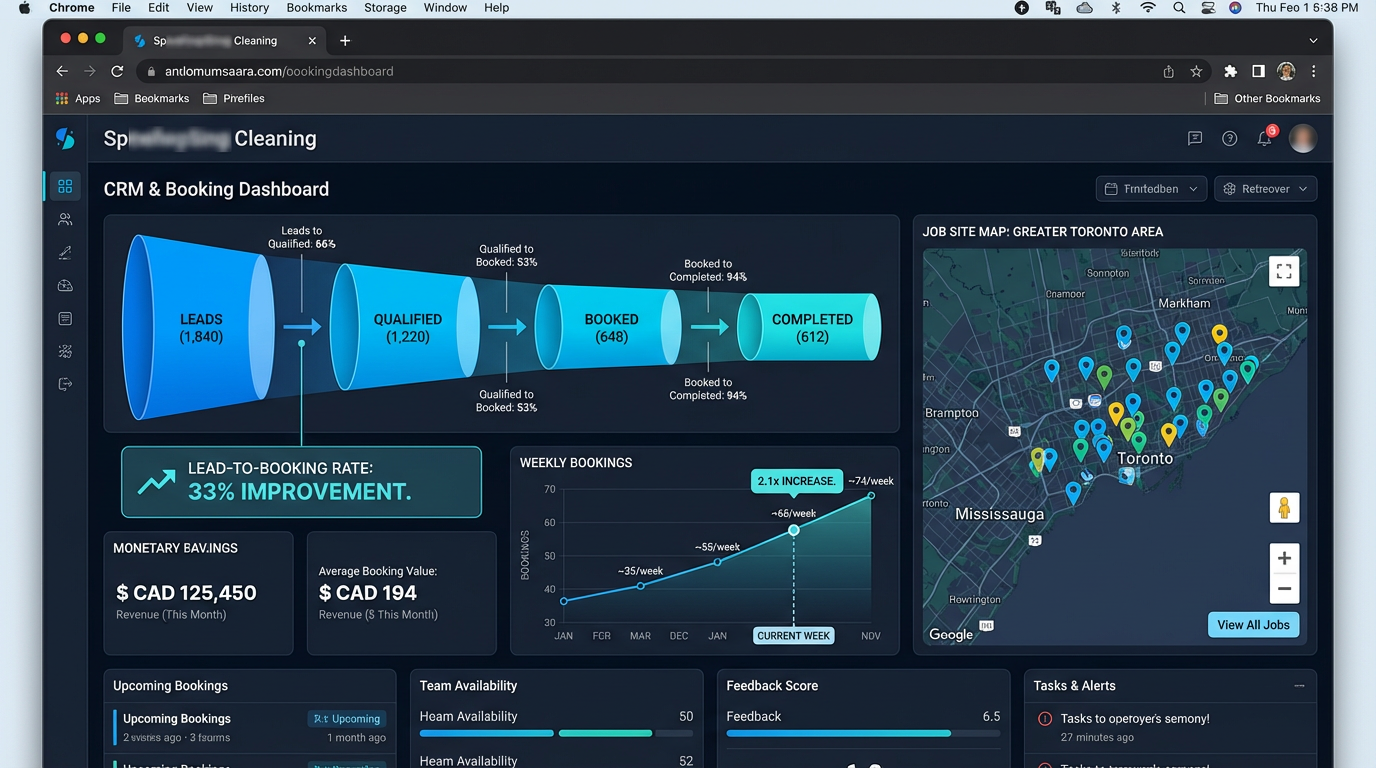
Residential cleaning company — Cleaning funnel data
Funnel Data
CleaningCanada

Residential cleaning company

Challenge.Inconsistent lead flow and high cost per booking from a previous agency that ran generic lead form ads.

Strategy.Rebuilt the offer, introduced area-based campaign splits, qualified leads at the form level, and tied creative angles to the pain points the sales team was actually hearing on calls.

−47%
Cost per qualified lead
2.1×
Booked jobs per week
+33%
Lead-to-booking rate
Context

Residential cleaning company in the Greater Toronto Area running standard Meta lead form ads with a previous agency. Cost per lead looked acceptable on paper, but only 1 in 6 leads was converting to a booked job.

Diagnosis

The form was too easy to complete and the offer was too generic. Sales was burning hours on tire-kickers, and the creative was showing the same 'sparkling kitchen' shot every brand in the category was running.

Execution
  • Replaced the offer with a flat-rate first-clean tied to a specific square-footage range, removing pricing friction.
  • Added 3 qualifying questions to the lead form (postcode, frequency, property type) to filter intent.
  • Split campaigns by service area and ran area-specific creative that named the suburb in the first frame.
  • Worked with the sales lead weekly to feed real call objections back into the next round of ad copy.
Outcome

Cost per qualified lead dropped 47% and booked jobs per week more than doubled. The sales team stopped chasing dead leads, which freed time for upsells and referral asks.

Timeline
4 months
Spend
Held flat, output 2.1×
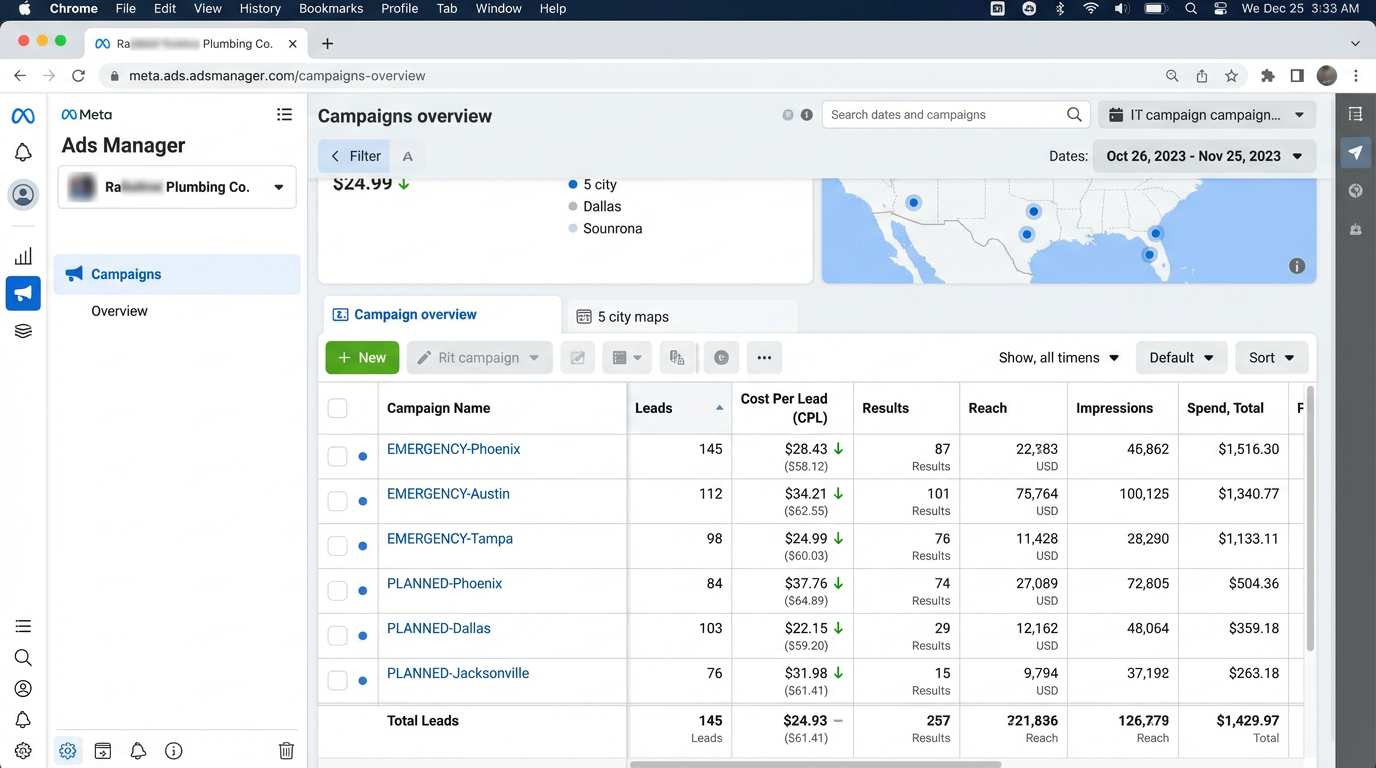
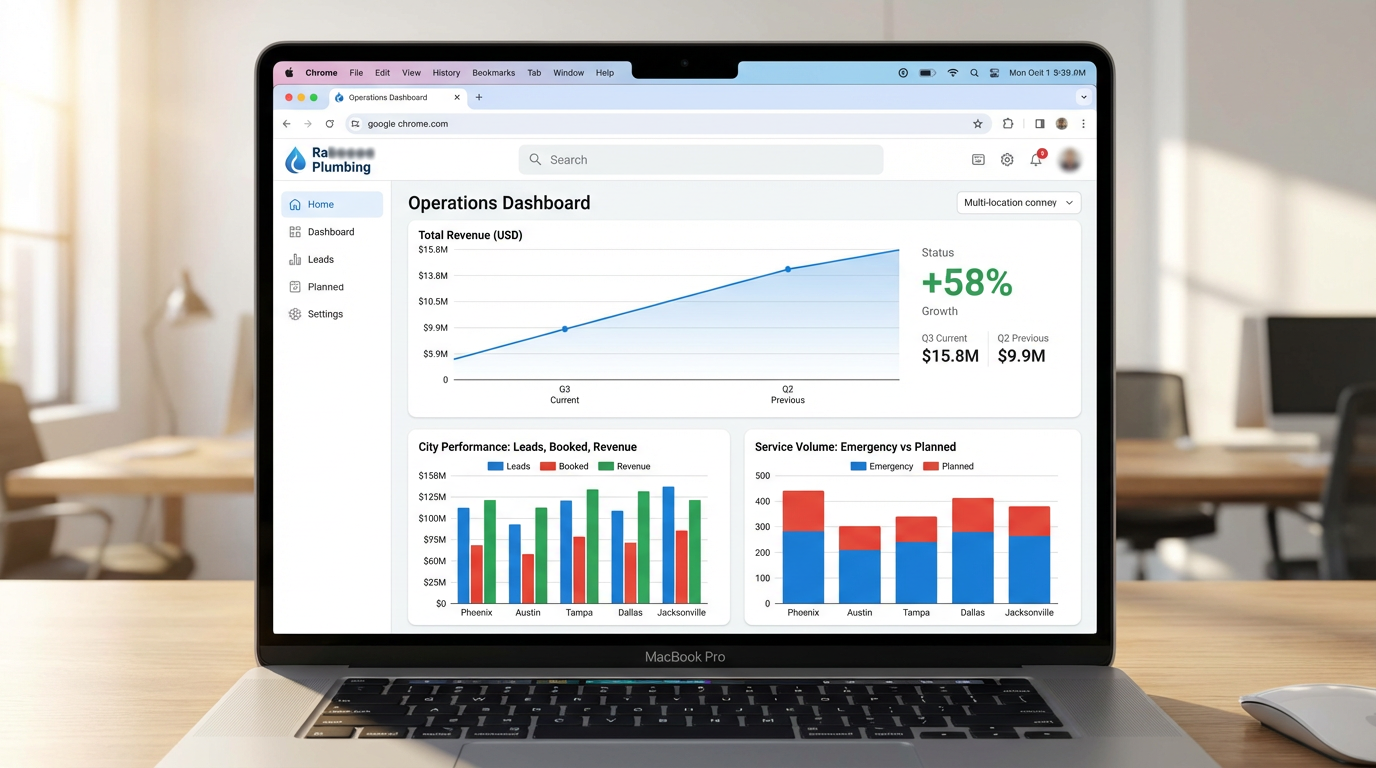
Multi-location plumbing company — Plumbing performance dashboard
Ads Manager
Multi-location plumbing company — Plumbing ROAS report
ROAS Report
Multi-location plumbing company — Plumbing funnel data
Funnel Data
PlumbingUnited States

Multi-location plumbing company

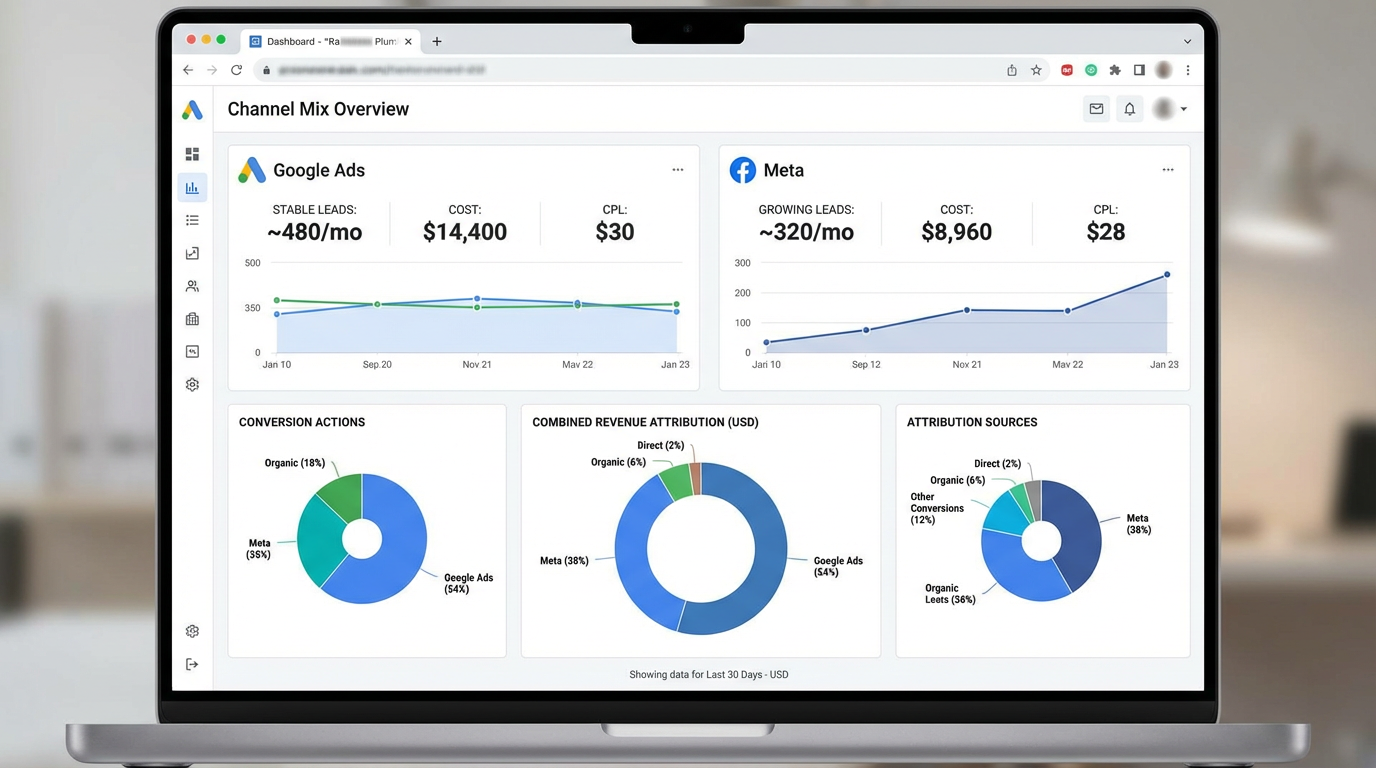
Challenge.Wanted predictable lead flow without depending only on Google Ads, but earlier Facebook tests had failed.

Strategy.Designed location-specific campaigns, used emergency vs. planned-service messaging splits, and added a simple lead qualification step before handoff to the call team.

−41%
Cost per lead
5 cities
Service-area coverage
+58%
Monthly revenue lift
Context

Multi-location plumbing company across five cities in the US Sunbelt, heavily dependent on Google Ads for lead flow. Two prior Facebook tests had failed to produce profitable leads.

Diagnosis

Earlier tests treated plumbing as a single service with one generic creative. In reality, an emergency burst-pipe customer and a planned water-heater install behave nothing alike — they need different hooks, different offers and different response times.

Execution
  • Split campaigns into 'emergency' and 'planned service' tracks, each with its own creative and landing experience.
  • Built location-specific ad sets per city with locally shot creative and named technicians.
  • Added a one-question pre-qualifier on the form (issue type) so the call team could prioritise the queue.
  • Set a weekly review with the operations lead to pause underperforming cities and reinvest into top performers.
Outcome

Cost per lead dropped 41% across the five-city footprint and monthly revenue grew 58% within two quarters. Meta now sits as a stable second channel alongside Google, removing the single-channel risk.

Timeline
2 quarters
Spend
Scaled into 5 markets
Let's grow your brand

Ready for paid social that moves the business?

Tell me about the brand, the goal and the timeline. If it's a fit, you'll get a free 20-minute audit call and a written first-impression on your account.

  1. 01
    You send a brief
    Brand, goal, current spend.
  2. 02
    I review the account
    Free first-impression notes within 48h.
  3. 03
    We jump on a call
    20 minutes. No pitch deck. No pressure.